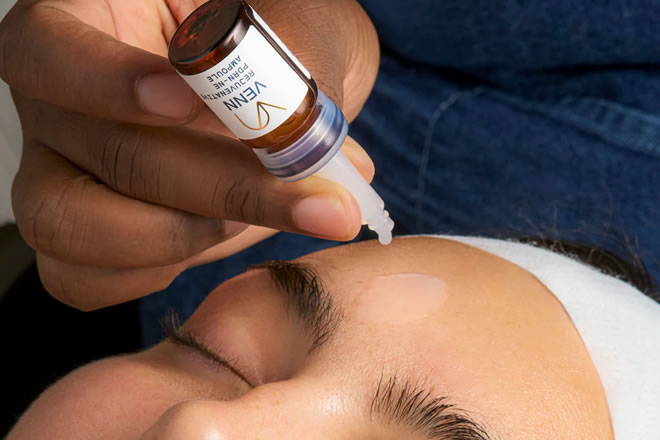
Kim Kardashian gets it injected into her face. Jennifer Aniston swears by it. Kris Jenner, at 70, credits it for her skin. And right now, TikTok is flooded with millions of people smearing it on their faces at home while Korean beauty brands bottle it into everything from toners to ampoules to overnight masks. The ingredient behind all of this is PDRN. Short for polydeoxyribonucleotide. It is salmon DNA. And if that sentence made you do a double take, you are not alone.
Here is the complete, honest guide to what PDRN actually is, whether the science holds up, what it can and cannot do for your skin, and the best products to try in 2026.
What Is PDRN? The Basics Explained Simply
PDRN stands for polydeoxyribonucleotide. It is a compound made of DNA fragments extracted from the reproductive tissue of salmon, specifically species like Oncorhynchus mykiss and Oncorhynchus keta, which are unusually rich in nucleic acids.
Before you picture what that means literally: what ends up in your serum is not what you are imagining. The raw material goes through high-temperature processing that breaks the DNA into small nucleotide fragments, then through rigorous purification that removes all proteins, lipids, and cellular debris. The final ingredient is a sterile, purified DNA solution with a purity level of 95 to 99%. It is biocompatible with human skin because salmon DNA shares up to 98% structural similarity with human DNA. Your skin recognises it and does not treat it as a foreign invader.
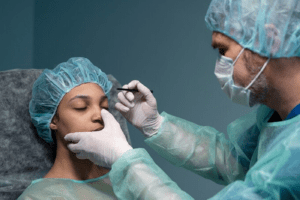
It started in medicine. PDRN was originally developed for wound healing, used in treatments for diabetic ulcers, burns, and post-surgery recovery, where it showed consistently strong regenerative effects. Korean dermatologists began adapting it for aesthetic treatments in the early 2000s under the brand name Rejuran, and the Rejuran facial became one of the most popular clinic treatments in South Korea. The rest, as the beauty industry likes to say, is history.
Now it is in your Sephora basket.
How Does PDRN Actually Work on Skin?
PDRN works through two primary mechanisms that make it genuinely interesting from a scientific standpoint.
First, it activates adenosine A2A receptors in your skin cells. These receptors are directly involved in inflammation control and tissue repair. When activated, they trigger a chain reaction that stimulates new blood vessel formation, reduces inflammatory response, and accelerates cellular regeneration. This is why PDRN was so effective in wound healing settings before it crossed over into cosmetics.
Second, it supplies nucleotides directly to skin cells, giving them ready-made building blocks for DNA repair rather than forcing the cell to produce them from scratch. In theory, this leads to increased fibroblast activity, which means more collagen and elastin production, reduced inflammation, and faster skin healing.
The key word is theory, and we will get to what the clinical evidence actually shows in a moment. But the mechanism of action is scientifically coherent, which separates PDRN from many beauty trends that have no plausible biological rationale at all.
What Does the Science Actually Say?
This is where honest PDRN coverage separates itself from hype, and your readers deserve the real picture.
The clinical evidence for injectable PDRN, the kind used in Korean clinics, is promising but not yet definitive. A 2022 trial with 27 patients showed improvements in texture, elasticity, and scarring that outperformed hyaluronic acid injections, though the results did not reach statistical significance. A 2023 South Korean study found that PDRN may help minimise sun damage by lightening brown spots and hyperpigmentation. The studies consistently show real improvement in some patients, but they are small, ranging from 5 to 44 participants, short in duration, and most come from Korea where PDRN research is most active.
One dermatologist put it plainly: results with these injections are not consistent or reliable, and it is difficult to predict who will get good results.
Here is the bigger issue for at-home users: almost everything you have heard about PDRN comes from injectable studies, not the serums and essences on shelves. Injectable PDRN delivers the compound directly into the dermis where it can trigger the cellular responses described above. Topical PDRN, applied to the skin surface, faces a significant barrier: PDRN molecules are too large to penetrate the skin on their own. What topical products can deliver is milder, primarily hydration, soothing of inflammation, and improved skin texture at the surface level. Not nothing, but not the injectable results you see in Korean before-and-after videos.
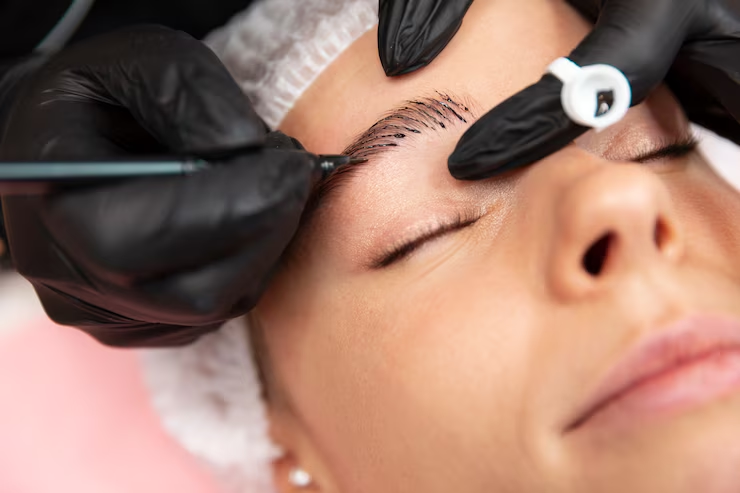
The exception is microneedling combined with topical PDRN, which creates micro-channels in the skin that allow significantly deeper absorption. This is a legal and increasingly popular treatment in US clinics and medispas, and the results from this combination are considerably stronger than topical use alone.
The bottom line from dermatologists: topical PDRN is a legitimate, low-risk skincare ingredient with real hydration, soothing, and mild regenerative benefits. It is not a replacement for injectables. It is not going to restructure your dermis from a serum bottle. But for people with sensitive, inflamed, or post-procedure skin, it has a genuinely useful place in a routine.
PDRN vs Everything Else: How Does It Compare?
Compared to retinol, PDRN is considerably gentler and better suited to sensitive skin. Retinol directly stimulates collagen production and accelerates cell turnover but causes irritation in many users. PDRN supports repair without the same irritation risk, making it a smart pairing with retinol rather than a replacement for it.
Compared to hyaluronic acid, PDRN goes deeper in theory. Hyaluronic acid works primarily on surface hydration. PDRN targets the cellular mechanisms underneath. In practice at the topical level the difference is subtle, but the regenerative potential of PDRN gives it more long-term interest than a pure hydrating ingredient.
Compared to peptides, PDRN and peptides work in complementary ways. Peptides signal the skin to produce more collagen. PDRN provides the cellular building blocks for repair. The best PDRN products on the market combine both, and the results from that pairing are the most consistently positive in community reviews.
The Best PDRN Skincare Products to Buy in the USA in 2026
Rejuran Turnover Ampoule C-PDRN
Price: $52 for 1 oz Where to buy: Amazon US, Sephora, YesStyle
The brand that started the PDRN movement and the product that brought it to mainstream US attention. Rejuran is the original Rejuran Healer company, the same brand behind the injectable treatment that Jennifer Aniston and Kim Kardashian have credited publicly. Their topical Turnover Ampoule contains 5,000 ppm of their proprietary c-PDRN alongside adenosine, a proven ingredient for tightening and radiance boosting.
It leaves a dewy, glass-skin finish and is slightly sticky before it absorbs, which testers consistently note but find worth it for the results. It is fragrance-free and suitable for all skin types. If you are going to spend money on PDRN, buying from the original clinical source gives you the most confidence in formulation quality and ingredient concentration.
Best for: Anti-aging, dull skin, post-procedure recovery Our score: ⭐⭐⭐⭐⭐
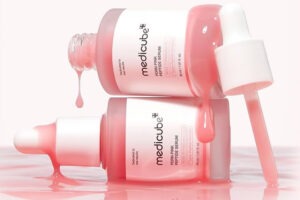
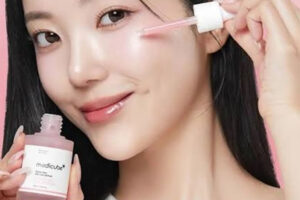
Medicube PDRN Pink Peptide Serum
Price: Around $35 to $45 Where to buy: Amazon US, Sephora, Medicube official
The most viral PDRN product on TikTok right now, and the one that converted the most sceptics. Medicube pairs salmon PDRN with five peptides, niacinamide, and collagen for a formula that addresses firming, hydration, glow, and soothing simultaneously. It has Amazon bestseller status in the serum category and is praised specifically for visible results in reducing inflammation and brightening uneven skin tone.
It is a particularly strong choice for rosacea-prone or reactive skin that needs calming alongside its anti-aging work. The peptides are doing significant heavy lifting alongside the PDRN, making this one of the most well-rounded formulas at this price point.
Best for: Inflamed, uneven, or combination skin wanting glow and firming Our score: ⭐⭐⭐⭐⭐
VT Cosmetics PDRN 100 Essence
Price: Around $28 to $38 Where to buy: Amazon US, YesStyle, Ulta Beauty
VT Cosmetics uses a plant-derived vegan PDRN sourced from ginseng rather than salmon, making it the go-to option for anyone who wants the PDRN mechanism without the animal-derived ingredient. It is unscented, loaded with panthenol for barrier repair, and consistently praised for its soothing and daily glow benefits.
Vegan PDRN has shown promise in preclinical trials for delivering similar skin rejuvenation and repair benefits to salmon PDRN, and the formula is noticeably gentler, making it excellent for daily use on sensitive skin that reacts to most actives. It is one of the most recommended editor picks in the PDRN category for exactly this reason.
Best for: Sensitive skin, vegan beauty, daily barrier support Our score: ⭐⭐⭐⭐½
Innisfree Retinol Green Tea PDRN Firming Serum
Price: Around $32 Where to buy: Amazon US, Innisfree official, Sephora
Innisfree combines a 1% retinol complex with vegan PDRN from green tea extract in a formula designed for those who want retinol results with less of the irritation. The PDRN acts as a soothing counterpart to the retinol, supporting skin recovery alongside the cell turnover retinol triggers. If you have always wanted to use retinol but found it too harsh, this combination is worth trying.
Best for: Retinol beginners, fine lines and texture, those who want PDRN plus proven actives Our score: ⭐⭐⭐⭐
Then I Met You Renewing Serum
Price: Around $68 Where to buy: Sephora US, Then I Met You official
The premium option for those who want PDRN in a luxurious, comprehensive formula. Then I Met You pairs PDRN with centella asiatica, niacinamide, and a peptide complex in a serum that addresses multiple signs of aging while calming and repairing the skin barrier. The finish is silky and immediately skin-smoothing, and the overall experience is noticeably more elevated than the Korean drugstore options. For those who want the ingredient in a higher-end context, this is the one.
Best for: Mature skin, those who want a premium PDRN experience with clean formulation Our score: ⭐⭐⭐⭐
Should You Try PDRN at a US Clinic?
If you are curious about the injectable treatment you have seen celebrities reference, here is what you need to know specifically for the US market.
Injectable PDRN is not FDA-approved in the United States for cosmetic use. Treatments like Rejuran Healer cannot be legally marketed as FDA-cleared procedures. They are more commonly and safely accessed in South Korea, where the ingredient has full regulatory approval and a long track record of clinical use.
Some US clinics offer PDRN combined with microneedling as an off-label service, and this combination is legal and increasingly popular. It delivers meaningfully better results than topical alone by creating micro-channels for absorption. If you want to explore this, look for a board-certified dermatologist or licensed aesthetician rather than a general medspa.
Medical tourism for PDRN injections in South Korea has risen significantly among US consumers who want the full injectable treatment. If that is something you are considering, research extensively, verify clinic credentials, and understand that post-procedure care and follow-up will need to happen back home.
For the vast majority of people reading this, starting with a topical PDRN serum is the sensible, low-risk, and increasingly well-evidenced first step.
How to Add PDRN to Your Skincare Routine
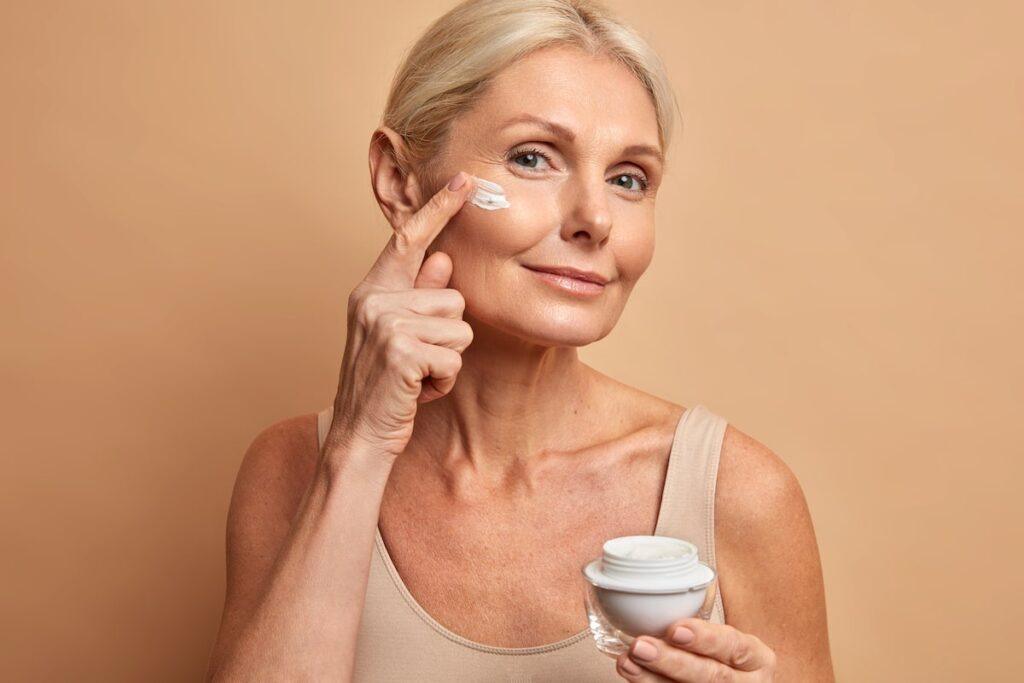
PDRN serum fits naturally into a standard skincare routine as a treatment step. Apply it after cleansing and toning, before your moisturiser and SPF. It pairs well with niacinamide, peptides, ceramides, and hyaluronic acid. It can be used alongside retinol, where its soothing properties actually help offset retinol irritation.
Use it consistently for at least eight weeks before judging results. PDRN is a cumulative ingredient, not an overnight fix. The most commonly reported timeline in community reviews is visible improvement in skin texture and hydration by week four, with more significant changes to tone evenness and firmness appearing by week eight to twelve.
Store it away from direct sunlight as with most active serums, and check the expiration date if buying from international retailers.
Is PDRN Worth the Hype?
For the right person, yes. PDRN is one of the few viral skincare ingredients in 2026 that has genuine scientific rationale behind it, a track record of clinical use in dermatology, and meaningful community evidence of real world results at the topical level.
It is not the injectable miracle the most dramatic TikToks suggest. Topical PDRN works at a surface level and its results, while real, are milder than what injections deliver. But for sensitive, inflamed, or post-procedure skin, it is an excellent supporting ingredient. For anyone wanting to add something genuinely new and science-backed to their routine without the aggression of a strong active, it is worth trying.
Start with the Medicube PDRN Pink Peptide Serum if budget is a consideration. It is the most viral, the most widely available, and the most consistently praised in community testing. If you want the most clinically credible topical product, Rejuran’s own serum is the one to reach for.
Either way, your skin will not mind that it is salmon DNA. It has been waiting for exactly this kind of repair.
Read Also>>>What is the 4 2 4 rule in skincare?