
If you have searched this question recently, you are not alone. Rhode has become one of the most talked about skincare brands in the world, and Hailey Bieber’s face is so closely tied to it that most people assume she is still the sole owner. The real answer is more complicated than a simple yes or no, and it changed dramatically in 2025. Here is exactly what happened, what Hailey Bieber’s role is today, and what it means for the brand going forward.
So, Does Hailey Bieber Still Own Rhode?
No, not entirely. Hailey Bieber founded Rhode in 2022 and was its sole owner in the early years, but in May 2025 she sold the company to e.l.f. Beauty in a deal worth approximately one billion dollars. The acquisition officially closed in the summer of 2025, meaning Rhode is now owned by e.l.f. Beauty, a publicly traded cosmetics company.
Bieber did not walk away from the brand entirely. As part of the deal, she remains deeply involved in Rhode’s day to day creative direction, but ownership of the company itself now sits with e.l.f. Beauty and its shareholders, not with Bieber personally.
Read Also>>>Rhode Summer 2026 Collection Review
How Did Hailey Bieber Build Rhode in the First Place?
Rhode launched in June 2022, co-founded by Hailey Bieber alongside Michael D. Ratner and Lauren Ratner. From the start, the brand leaned into a minimalist, dewy, glazed donut aesthetic that matched Bieber’s own personal beauty image, which had already gone viral multiple times before the brand even existed.
The early product line was small and deliberately so. Rhode launched with a peptide lip treatment, a barrier restore cream, and a glazing milk toner, and resisted the temptation to flood the market with dozens of products the way many celebrity beauty lines tend to. This restraint became part of the brand’s identity and was frequently cited by beauty editors as one of the smartest things about Rhode’s strategy.
The brand grew at a remarkable pace. In the fiscal year before the sale, Rhode generated 212 million dollars in net sales, an enormous figure for a company that was only three years old and had built that revenue almost entirely through direct to consumer sales and social media, without a single product on a physical store shelf.
The e.l.f. Beauty Acquisition: What Actually Happened
On May 28, 2025, e.l.f. Beauty announced a definitive agreement to acquire Rhode for one billion dollars. At the time, this was described as e.l.f.’s largest acquisition ever, surpassing its previous purchase of skincare brand Naturium for 355 million dollars in 2023.
The structure of the deal is worth understanding because it explains exactly what changed and what did not. The agreement consisted of 600 million dollars paid in cash, 200 million dollars paid in e.l.f. Beauty stock to Rhode’s existing equity holders, and a further 200 million dollar earn out that depends on Rhode hitting specific performance targets over the following three years.
In plain terms, this means Hailey Bieber and Rhode’s other equity holders received a mix of cash and shares in e.l.f. Beauty itself in exchange for giving up ownership of the company. The deal was approved by e.l.f. Beauty’s board of directors and closed in the second quarter of e.l.f.’s 2026 fiscal year, after clearing the standard regulatory and shareholder approval process.
What Is Hailey Bieber’s Role at Rhode Now?
This is the part that confuses people the most, and understandably so, because Bieber’s public presence at Rhode has not changed much from the outside looking in.
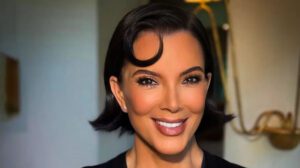
Following the sale, Hailey Bieber stayed on as Rhode’s chief creative officer and head of innovation. In this role she continues to oversee the creative direction, product development, and marketing of the brand, which is exactly the work she was doing before the sale. She also took on an additional role as a strategic beauty advisor to both Rhode and e.l.f. Beauty more broadly, giving her some input beyond Rhode alone.
What she no longer holds is ownership. Before the deal she was the founder and an owner of the company. After the deal, she is an employee and creative leader of a brand that is now owned by a separate, publicly traded company. The distinction matters because it changes who ultimately makes the financial and strategic decisions about Rhode’s future, even though Bieber’s creative fingerprint remains the same.
e.l.f. Beauty’s chairman and CEO Tarang Amin spoke about the acquisition at the time, describing Rhode as a likeminded disruptor and praising Bieber as one of the most thoughtful founders he had encountered, language that reflects how much e.l.f. valued keeping Bieber closely involved even after taking ownership of the business.
Why Did e.l.f. Beauty Pay One Billion Dollars for Rhode?
A billion dollars is an extraordinary price for a three year old skincare brand with a relatively small product catalogue, and it raised plenty of eyebrows in the beauty industry. Industry analysts pointed to a few clear reasons.
The first is Bieber’s personal brand value. A chemistry professor and skincare industry founder interviewed about the deal noted that celebrity association was probably the single most influential factor in the valuation, more than any unique formulation or ingredient technology in Rhode’s actual products.
The second is engagement and social reach. Rhode built an extremely strong direct relationship with its customers through social media, and Bieber’s own personal following, which grew even further following her marriage to Justin Bieber, gave the brand a marketing engine that would have cost a fortune to replicate through traditional advertising.
The third is retail expansion potential. Rhode had been entirely direct to consumer up until the deal, selling only through its own website. The acquisition allowed e.l.f. to put Rhode on shelves at Sephora across the United States, Canada, and eventually the United Kingdom, opening up an enormous new sales channel that the brand had never had access to before.
For e.l.f. specifically, the deal also pushed the company into a more premium, prestige adjacent market. Even though Rhode’s pricing, with most products in the 20 to 40 dollar range, is not dramatically more expensive than e.l.f.’s own budget positioned products, the brand carries a cultural cachet that e.l.f.’s existing portfolio did not have.
What Has Changed for Rhode Since the Acquisition?
Since the deal closed, Rhode’s footprint has expanded considerably. The brand’s products began appearing on shelves at Sephora locations across North America in the autumn following the sale, with a UK launch following not long after, giving Rhode its first ever physical retail presence after years as a purely online brand.
e.l.f. Beauty has reported the financial impact of the acquisition in its subsequent earnings updates, with the company’s sales showing measurable growth in the period following the deal’s closing, partly attributed to Rhode’s contribution to the wider business.
Bieber has also continued to expand Rhode’s product and cultural reach since the sale. In 2026, she and her husband Justin Bieber introduced a joint Rhode collaboration, blending the brand’s skincare identity with the couple’s combined public profile, a move that would have been entirely her own commercial decision before the sale but now operates within the framework of e.l.f.’s ownership and strategic direction.
Is This a Common Path for Celebrity Beauty Brands?
Rhode’s sale fits into a broader pattern that has become increasingly common in the beauty industry. Celebrity founded brands that achieve strong early growth are frequently acquired by larger beauty conglomerates who have the retail relationships, supply chain infrastructure, and marketing budgets to scale the brand far beyond what an independent founder could achieve alone.
What makes Rhode’s situation slightly different from many other celebrity brand acquisitions is the scale of Bieber’s continued involvement. In many similar deals, the celebrity founder either exits entirely after a transition period or becomes a largely symbolic brand ambassador with limited operational input. Bieber’s continued role as chief creative officer and head of innovation suggests e.l.f. Beauty places a genuinely high value on keeping her hands on the actual product and creative decisions, not just her name on the packaging.
Frequently Asked Questions
Did Hailey Bieber sell Rhode completely? She sold ownership of the company to e.l.f. Beauty but remains employed by Rhode in a senior creative role. She did not walk away from the brand entirely, but she no longer owns it.
How much did Hailey Bieber make from selling Rhode? The total deal was valued at approximately one billion dollars, structured as 600 million dollars in cash, 200 million dollars in e.l.f. Beauty stock, and a further 200 million dollar earn out tied to performance over three years. The exact personal amount Bieber received depends on her individual equity stake in the company at the time of sale, which has not been publicly disclosed in detail.
Is Rhode still considered Hailey Bieber’s brand? Culturally and creatively, yes. Bieber remains the public face of Rhode and continues to drive its product development and marketing. Legally and financially, the brand is now part of e.l.f. Beauty’s portfolio.
Can you still buy Rhode products the same way? Yes, and there are now more ways to buy them than before. Rhode remains available through its own direct to consumer website, and since the acquisition, products have also become available in physical stores at Sephora across North America and the United Kingdom.
Will Hailey Bieber leave Rhode in the future? There is no public indication that Bieber plans to leave her role at Rhode. Her continued title as chief creative officer and head of innovation, along with her ongoing public projects under the Rhode name, suggest she intends to remain closely involved with the brand for the foreseeable future.