New York City’s youngest mayor in over a century just made Minoxidil the most Googled hair loss treatment on the planet. Again.
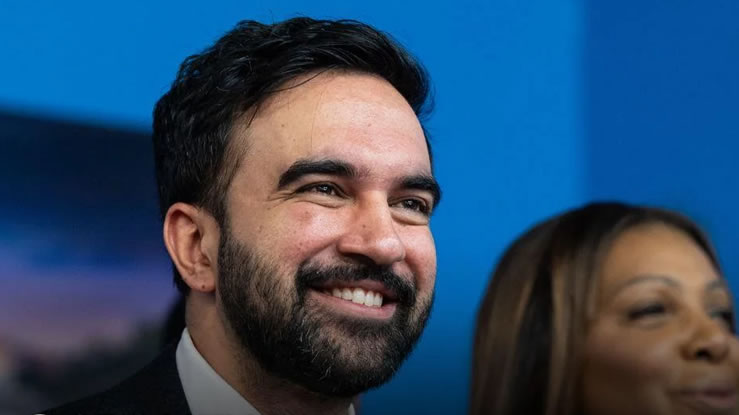
Zohran Mamdani, 34, the newly sworn-in NYC Mayor who took office on January 1st 2026, went viral this month after casually admitting on the Pablo Torre Finds Out podcast that he has been using Minoxidil for around six months to combat early signs of hair loss. While being mic’d up before the interview at Gracie Mansion, Mamdani complimented the host on his hair. Torre thanked his “Philippine DNA,” to which Mamdani responded that he could thank a drug for his: “I’m on that minoxidil.”
Mamdani joked that he started using it to avoid having to get a hair transplant, quipping, “I’m just like trying to push off Turkey like out of the term.”
The internet, predictably, lost its mind.
The Reddit post went viral, with the top comment earning over 3,200 likes reading: “I love when men worry about their appearance. We need to balance the scales.” Hasan Piker, the Twitch streamer with millions of followers, posted a TikTok in response that racked up 355,500 likes, captioned simply: “we’re saving the mayor’s hair.”
The Reddit user who posted the clip noted that Mamdani had received the original recommendation for Minoxidil from Piker himself during an April 2025 interview titled “Talking to NYC’s Future Mayor,” meaning Hasan Piker may have indirectly influenced the hairline of the most powerful mayor in America.
And based on the results, the advice seems to have paid off. Whatever Mamdani is doing appears to be working: based on photos taken a decade apart, his hairline has yet to budge a centimetre in the last ten years.
So what exactly is Minoxidil, how does it work, and should you be using it? Here is the full breakdown.
What Is Minoxidil?
Minoxidil was originally developed in the 1950s as an oral medication to treat high blood pressure. During clinical trials, researchers noticed an unexpected and fairly dramatic side effect: patients were growing more hair. A lot more hair.
By the 1980s, a topical version was approved by the FDA specifically for hair loss, marketed under the brand name Rogaine. It became the first hair loss treatment ever approved by the FDA, and it remains the most widely used over-the-counter hair regrowth treatment in the world today.
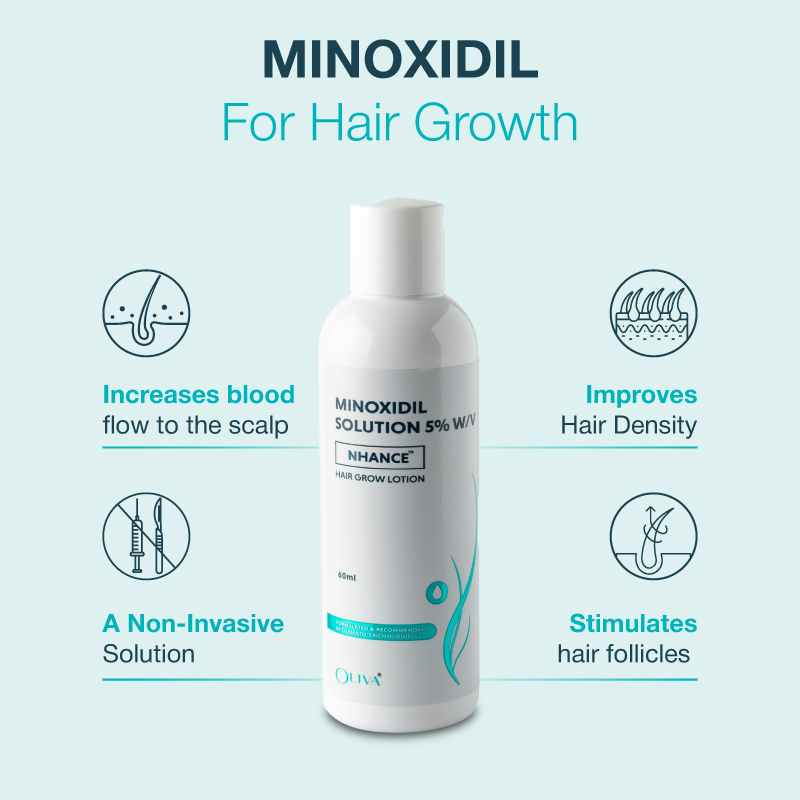

Minoxidil is available over the counter as a topical solution or a foam, and as a prescription oral pill. All three formats are in active use, and the right one for you depends on your lifestyle, the extent of your hair loss, and your skin sensitivity.
How Does Minoxidil Actually Work?
Minoxidil works by widening blood vessels and increasing blood flow to hair follicles. More blood flow means more oxygen and nutrients reaching the follicle, which pulls dormant follicles back into the active growth phase of the hair cycle.
It does not block DHT, the hormone responsible for male and female pattern baldness. This is an important distinction. Minoxidil stimulates growth at the follicle level but does not address the underlying hormonal cause of hair loss. This is why it is often used in combination with finasteride, which does block DHT, for more comprehensive results.
Read Also>>>Topical minoxidil major side effects.
Clinical studies consistently show that Minoxidil is most effective in the following scenarios: early to moderate hair loss, active follicles that have not yet completely miniaturised, and consistent daily use maintained over at least four to six months. It will not regrow hair from completely bald areas where follicles have been dormant for years.
What Minoxidil is genuinely excellent at, and what Mayor Mamdani is likely experiencing, is slowing or stopping ongoing hair loss and stimulating regrowth in areas where follicles are still partially active.
Topical vs Oral Minoxidil: Which Is Better?
This is the biggest question in hair loss treatment circles right now, and the answer has shifted significantly over the last two years.
Topical Minoxidil, either a liquid solution or a foam applied directly to the scalp, has been the standard for decades. It is widely available without a prescription, is relatively low-cost, and has a well-established safety record. The main drawbacks are that it requires consistent daily application, can leave a slightly greasy residue with the liquid formula, and needs to be applied to a dry scalp for maximum absorption.
Oral Minoxidil, taken as a low-dose pill, is the newer and increasingly popular alternative. Originally available only by prescription and used at high doses for blood pressure, dermatologists began prescribing it at much lower doses specifically for hair loss around 2020. The results from community use and clinical trials have been striking, with many users reporting noticeably better results than with topical use alone.
The trade-off with oral Minoxidil is a slightly higher risk of systemic side effects, including fluid retention, facial hair growth in women, and in rare cases heart palpitations. For the vast majority of users at the low doses prescribed for hair loss, these side effects are minimal or nonexistent. But it does require a prescription and medical oversight.
For most people starting out, topical Minoxidil is the sensible, low-barrier first step. For those who have tried topical and want stronger results, oral Minoxidil under a doctor’s supervision is the next logical move.
Does Minoxidil Actually Work? What the Evidence Says
Yes, and the evidence is robust. Multiple randomised, double-blind, placebo-controlled clinical trials have confirmed that Minoxidil produces measurable hair regrowth in the majority of users when applied consistently.
A 48-week trial comparing 5% topical Minoxidil to a placebo found significantly greater hair density and coverage in the Minoxidil group. Real-world community data from hundreds of thousands of users on forums like r/HairLoss and r/Minoxidil consistently shows visible improvement beginning around the three to four month mark, with the most significant regrowth appearing between six and twelve months.
The caveat the entire hair loss community agrees on is this: you have to keep using it. Minoxidil is not a cure. If you stop, the hair it helped maintain or regrow will typically shed within three to six months as follicles return to their previous state. It is a maintenance treatment, not a permanent fix.
Mayor Mamdani, six months in and with a hairline that photographs consistently strong, is a real-world example of exactly what early-stage, consistent Minoxidil use looks like when it is working.
The Best Minoxidil Products to Buy in 2026
Regaine Men’s Extra Strength Scalp Solution 5% The most trusted name in Minoxidil, available at Boots, Amazon UK, and most UK pharmacies. The 5% formula is the clinical standard for men. Apply directly to the scalp twice daily. Available as both a liquid and a foam, with the foam being the more convenient and better-tolerated option for daily use.
Regaine Men’s Foam 5% The foam version of Regaine is lighter, easier to apply, and dries faster than the liquid. It is particularly well suited to those with thicker hair where getting liquid solution to the scalp is difficult. One of the most popular Minoxidil formats in the UK.
Hims 5% Minoxidil Foam Hims has built a strong reputation in the men’s hair loss space with a subscription model that delivers Minoxidil foam directly to your door monthly. Competitively priced, well-packaged, and often bundled with finasteride for a comprehensive hair loss protocol.
Foligain Triple Action Hair Loss Serum A more advanced topical option that combines Minoxidil with Trioxidil, a multi-ingredient complex designed to address hair loss from multiple angles simultaneously. Consistently well-reviewed in the enthusiast hair loss community for users who want more than standard Minoxidil alone.
Kirkland Signature 5% Minoxidil Solution The budget-friendly generic Minoxidil that the hair loss community on Reddit has used as a benchmark for years. The active ingredient is identical to Rogaine at a fraction of the price, widely available through Amazon UK. If cost is a factor, this is where to start.
Minoxidil and Finasteride: The Power Combination
The most common topic in the hair loss community right now is combining Minoxidil with finasteride for what users call the Big Three (Minoxidil, finasteride, and Ketoconazole shampoo). This combination addresses hair loss from multiple angles simultaneously, which is why results for men who use all three consistently tend to be significantly better than using Minoxidil alone.
Finasteride requires a prescription in the UK but is available through online services like Hims, Manual, and Numan without a physical GP visit. Ketoconazole shampoo is available over the counter in most UK pharmacies.
If you are serious about halting hair loss rather than just slowing it, this combination is worth researching with a healthcare provider.
Who Should and Should Not Use Minoxidil
Minoxidil is suitable for men and women experiencing androgenetic alopecia, commonly known as male or female pattern baldness. It is most effective when started early, ideally in the first signs of thinning rather than after significant loss has occurred.
You should approach Minoxidil with caution or speak to a GP first if you have any cardiovascular conditions, low blood pressure, or if you are pregnant or breastfeeding. Women should use the 2% formula rather than the 5% unless directed otherwise by a doctor, as the higher concentration can occasionally trigger facial hair growth in women.
Minoxidil is not effective for hair loss caused by chemotherapy, thyroid disorders, nutritional deficiencies, or alopecia areata. If your hair loss has a medical cause other than pattern baldness, address the underlying condition first.
The Mayor, the Streamer, and a Cultural Shift
What makes the Mamdani moment genuinely interesting beyond the viral clip is what it represents culturally. Men talking openly about hair loss, admitting they are using treatment, and recommending it to others without embarrassment is relatively new and genuinely valuable.
One commenter captured the mood well: “Nothing to be ashamed of, Zohran. More men should be open about it.” The conversation that started between a Twitch streamer and a then-candidate for mayor in April 2025 ended up, a year later, reaching millions of people and making Minoxidil dinner table conversation.
That is not a small thing. Hair loss affects roughly half of all men by age 50 and a significant proportion of women too. The more openly it is discussed, the more people will seek treatment early, when it is most effective.
If you have been on the fence about trying Minoxidil, the mayor of New York City just made the case for starting sooner rather than later.
Read Also
Chin Harmonization: 7 Shocking Facts About Vinicius Jr’s Surgery