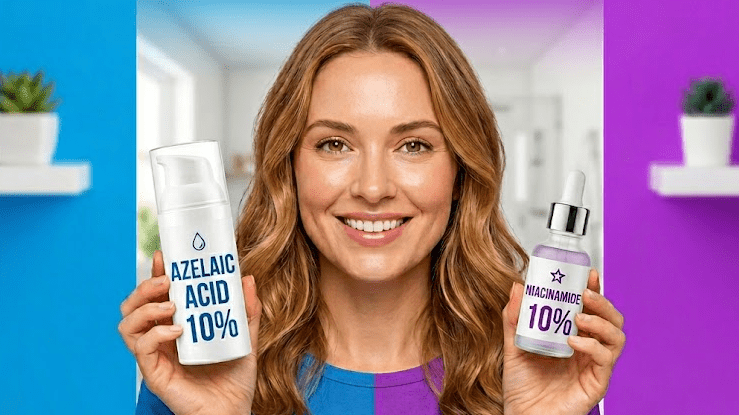
Azelaic acid and niacinamide both treat uneven skin tone, redness, and texture, but they work differently and suit different concerns. Niacinamide is the better starting point for most people: it is gentler, works across more skin types, and pairs easily with other actives. Azelaic acid is the stronger choice for rosacea, active acne, and stubborn pigmentation. For many people, the best answer is both, used in the same routine.
Niacinamide is the better choice for most beginners because it is gentler, more versatile, and easier to layer with other skincare actives. Azelaic acid is the stronger clinical option for rosacea, acne, and persistent post inflammatory hyperpigmentation that niacinamide alone cannot shift.
Both ingredients are among the most evidence backed actives available in over the counter skincare in the UK in 2026. Both address similar concerns, including redness, uneven tone, enlarged pores, and texture. And both are safe for long term daily use. The question is not which one is better in absolute terms but which one is right for your specific skin concerns, and whether you should be using one or both. This guide gives you the complete, evidence based answer.
What Is Niacinamide and How Does It Work?
Niacinamide is a form of Vitamin B3, a water soluble vitamin that is naturally present in many foods and in the skin itself. When applied topically, niacinamide works through several distinct mechanisms that collectively improve skin quality, tone, and resilience.
At a cellular level, niacinamide increases the production of ceramides, the lipids that make up the outer skin barrier. A stronger barrier means better moisture retention, less sensitivity to environmental triggers, and more resilient skin overall. This barrier building effect is why niacinamide is so widely recommended for dry, sensitive, and compromised skin types alongside its more visible benefits.
On the surface, niacinamide reduces the transfer of melanin from melanocytes to the skin cells above them, which over time fades dark spots and post inflammatory hyperpigmentation. It also reduces sebum production in oily skin, visibly tightens the appearance of enlarged pores, and has a documented anti inflammatory effect that calms redness and reactivity.
According to a clinical review published in the International Journal of Molecular Sciences in 2022, niacinamide demonstrates significant efficacy for hyperpigmentation, acne, rosacea, and skin ageing at concentrations of 2% to 10%, with 5% being the most widely studied and consistently effective concentration for general skin improvement.
Niacinamide is compatible with almost every other skincare active, including retinol, vitamin C, AHAs, BHAs, and hyaluronic acid. This versatility is one of its greatest practical advantages, as it can be slotted into almost any existing routine without concern about interactions or irritation.
What Is Azelaic Acid and How Does It Work?
Azelaic acid is a naturally occurring dicarboxylic acid found in grains including wheat, barley, and rye. In skincare, it is synthesised for consistency and stability and used at concentrations of 10% to 20% in over the counter and prescription formulations.
Azelaic acid works through three primary mechanisms, making it one of the most genuinely multitasking actives in dermatology. First, it is keratolytic, meaning it gently dissolves the bonds between dead skin cells and promotes smoother cell turnover without the irritation associated with stronger exfoliants. Second, it inhibits the enzyme tyrosinase, which is responsible for melanin production, making it a direct and potent treatment for hyperpigmentation at the source. Third, it has significant antimicrobial and anti inflammatory properties, making it clinically effective against the bacteria associated with acne and the inflammatory response associated with rosacea.
According to the British Association of Dermatologists, azelaic acid is a first line treatment recommendation for mild to moderate rosacea and is listed in UK clinical guidelines as an effective topical treatment for both acne and post inflammatory hyperpigmentation in all skin tones, including darker skin tones where the risk of irritation from stronger actives is a significant clinical concern.
Azelaic acid is available in the UK without a prescription at concentrations up to 10%, with higher concentrations requiring a prescription. The most widely used over the counter option in the UK is The Ordinary Azelaic Acid Suspension 10% at £7.90.
Azelaic Acid vs Niacinamide: How Do They Compare?
| Niacinamide | Azelaic Acid | |
|---|---|---|
| Ingredient type | Vitamin B3 | Dicarboxylic acid |
| Best OTC concentration | 5% to 10% | 10% |
| Primary benefit | Barrier repair, tone, pores, sebum | Pigmentation, acne, rosacea |
| Strength | Gentle | Moderate, stronger than niacinamide |
| Suitable for sensitive skin | Yes, excellent | Yes, with gradual introduction |
| Suitable for rosacea | Yes, supportive | Yes, first line clinical treatment |
| Suitable for acne | Yes, supportive | Yes, clinically proven |
| Suitable for hyperpigmentation | Yes, moderate effect | Yes, stronger effect |
| Safe for darker skin tones | Yes | Yes, preferred for darker tones |
| Can be used daily | Yes | Yes |
| Pairs well with retinol | Yes | Yes |
| Pairs well with vitamin C | Yes | Yes |
| Prescription required | No | No, for up to 10% |
| Average UK cost | £5 to £15 | £7 to £20 |
Which Skin Concerns Does Each Ingredient Address Best?
Understanding which ingredient addresses your specific concern most effectively is the most practical way to choose between them.
For uneven skin tone and dark spots
Both ingredients address hyperpigmentation, but through different mechanisms and with different levels of efficacy. Azelaic acid works directly at the source by inhibiting tyrosinase and stopping melanin production, producing a stronger and faster visible result for dark spots and post inflammatory hyperpigmentation. Niacinamide works by reducing melanin transfer, which is effective but produces a more gradual improvement. For mild, diffuse unevenness, niacinamide is sufficient. For stubborn dark spots, post acne marks, or melasma, azelaic acid is the stronger choice.
For redness and rosacea
Azelaic acid is the clear winner here. It is listed in the British Association of Dermatologists clinical guidelines as a first line topical treatment for rosacea, with a significant evidence base behind it. Niacinamide has a supportive, calming effect and reduces background redness over time, but it does not address the underlying inflammatory triggers of rosacea in the way azelaic acid does. For anyone with a rosacea diagnosis or persistent visible redness, azelaic acid should be the primary treatment.
For acne and breakouts
Both are effective for acne related concerns but again with different mechanisms. Azelaic acid directly kills the Cutibacterium acnes bacteria responsible for inflammatory acne and reduces the keratin buildup that causes comedones. Niacinamide reduces sebum production, calms post acne redness, and supports the skin barrier. For active acne, azelaic acid is the stronger clinical treatment. Niacinamide is excellent as a complementary ingredient and for managing oiliness and post acne redness.
For enlarged pores
Niacinamide wins clearly here. It has strong published evidence for reducing sebum production and visibly tightening the appearance of enlarged pores, particularly in oily and combination skin types. Azelaic acid has a mild keratolytic effect that can help clear blocked pores but it is not primarily a pore tightening treatment.
For skin barrier repair
Niacinamide wins clearly. Its ceramide boosting effect directly strengthens the skin barrier, making it one of the most effective over the counter ingredients for compromised, dry, or reactive skin. Azelaic acid does not have a significant barrier repair mechanism.
For sensitive and reactive skin
Both are suitable for sensitive skin, but niacinamide is the easier introduction because it very rarely causes irritation at standard concentrations. Azelaic acid can cause a mild tingling or warming sensation on first use, particularly in people with very reactive skin, though this typically resolves within one to two weeks as the skin adjusts.
For darker skin tones
Both ingredients are safe and recommended for darker skin tones. Azelaic acid is particularly valued in this context because it addresses hyperpigmentation without the risk of post inflammatory hyperpigmentation that stronger actives like high concentration retinol, glycolic acid, or hydroquinone can cause in deeper skin tones. Niacinamide is similarly gentle and well tolerated across all skin tones.
Can You Use Azelaic Acid and Niacinamide Together?
Yes, and for many people this combination delivers better results than either ingredient alone. Azelaic acid and niacinamide are fully compatible, work through complementary mechanisms, and do not interfere with or degrade each other.
The combination is particularly effective for:
Acne prone skin
Azelaic acid targets the bacteria and keratin buildup driving breakouts while niacinamide reduces sebum, calms redness, and supports the skin barrier.
Post acne hyperpigmentation
Azelaic acid fades the dark marks at the source while niacinamide reduces their visibility through melanin transfer inhibition, creating a combined effect stronger than either ingredient used alone.
Rosacea with enlarged pores and oiliness
Azelaic acid addresses the inflammatory rosacea component while niacinamide manages the sebum and pore appearance concerns that frequently accompany rosacea in oilier skin types.
How to layer them: apply niacinamide first as it is water based and absorbs quickly. Allow 30 to 60 seconds, then apply azelaic acid. If using both morning and evening, niacinamide can be applied twice daily while azelaic acid can be used once daily to start, building to twice daily as your skin adjusts.
The Best Niacinamide Products Available in the UK in 2026
The Ordinary Niacinamide 10% + Zinc 1% Price: £5.50 | Available at ASOS and Cult Beauty
The most widely used niacinamide serum in the UK. The zinc component adds additional sebum regulating benefits. Excellent value and highly effective for oily, acne prone, and uneven skin. Suitable for twice daily use.
Paula’s Choice 10% Niacinamide Booster Price: £39 | Available at paulaschoice.co.uk
A concentrated booster format that can be added to any existing serum or moisturiser. More expensive but a small amount goes a long way. Includes additional antioxidants for enhanced skin quality improvement.
CeraVe PM Facial Moisturising Lotion Price: £13 | Available at Boots and Superdrug
Contains 4% niacinamide alongside ceramides and hyaluronic acid, making it one of the most practical ways to incorporate niacinamide into a routine that also needs barrier support. Ideal for evening use.
La Roche-Posay Toleriane Double Repair Face Moisturiser Price: £19 | Available at Boots
Contains niacinamide alongside ceramides and La Roche-Posay thermal spring water. Excellent option for anyone with dry, sensitive skin who wants niacinamide within a soothing, barrier repairing formula rather than a standalone serum.
The Best Azelaic Acid Products Available in the UK in 2026
The Ordinary Azelaic Acid Suspension 10% Price: £7.90 | Available at ASOS and Cult Beauty
The most affordable and accessible azelaic acid product in the UK. The 10% suspension is a slightly gritty texture that some people find unusual but which is highly effective. Apply after water based serums and before moisturiser.
Paula’s Choice 10% Azelaic Acid Booster Price: £39 | Available at paulaschoice.co.uk
A silky gel texture that is significantly more pleasant to use than The Ordinary option. Includes additional soothing and antioxidant ingredients. Worth the additional cost for anyone who finds suspension textures difficult to work with.
Typology 10% Azelaic Acid Serum Price: £17 | Available at typology.com
A newer option gaining strong reviews in the UK market. Lightweight serum texture, easy to layer, and well tolerated by most skin types including sensitive skin. A good middle ground between The Ordinary and Paula’s Choice in both price and texture.
Skinoren Azelaic Acid Cream 20% (prescription) Price: available on prescription via your GP or online prescription services
The highest concentration azelaic acid available in the UK and a long established prescription treatment for both acne and rosacea. If over the counter 10% is not producing sufficient results after 12 weeks of consistent use, speak to your GP about a prescription for Skinoren.
How to Introduce Azelaic Acid and Niacinamide Into Your Routine
If you are starting with niacinamide only: Apply your niacinamide serum morning and evening after cleansing and any water based serums, before moisturiser and SPF. It does not require any gradual introduction and can be used daily from the first application. Most people see results within 4 to 8 weeks of consistent use.
If you are starting with azelaic acid only: Begin with once daily use in the evening, applied after water based serums and before moisturiser. Some people experience a mild tingling sensation in the first one to two weeks, which is normal and resolves as the skin adjusts. After two weeks of good tolerance, increase to twice daily if desired. Most people see meaningful results within 6 to 12 weeks of consistent use.
If you are using both together: Apply niacinamide first, allow 30 to 60 seconds, then apply azelaic acid. You can use niacinamide twice daily from the start. Introduce azelaic acid once daily in the evening for the first two weeks before adding a morning application. Always follow with SPF in the morning when using any active treatment.
Editor’s note: Azelaic acid is safe to use during pregnancy, unlike retinol and certain other actives. If you are pregnant and looking for an effective treatment for pigmentation or acne, azelaic acid is one of the most recommended options by UK dermatologists. Always inform your GP of any skincare actives you are using during pregnancy.
What Do UK Dermatologists Recommend?
UK dermatologists consistently recommend both ingredients as among the most clinically useful and well tolerated actives available without a prescription.
Dr. Justine Kluk, consultant dermatologist and Fellow of the British Association of Dermatologists, has noted that niacinamide is “one of the most versatile skincare ingredients available, with a strong safety profile and good evidence across multiple skin concerns, making it an excellent foundation ingredient for almost any skincare routine.”
On azelaic acid, Dr. Emma Wedgeworth, consultant dermatologist and British Skin Foundation spokesperson, has described it as “underused and underrated,” noting that “many patients who have struggled with rosacea or persistent pigmentation for years find significant improvement with azelaic acid that they had not achieved with other treatments.”
The British Association of Dermatologists’ clinical guidelines for rosacea specifically list topical azelaic acid as a recommended first line treatment, alongside oral antibiotics for more severe presentations.
Frequently Asked Questions About Azelaic Acid and Niacinamide
Q: Which is better for acne, azelaic acid or niacinamide? Azelaic acid is the stronger clinical treatment for active acne because it directly kills the bacteria responsible for inflammatory breakouts and prevents the keratin buildup that causes comedones. Niacinamide is an excellent complementary ingredient that reduces sebum, calms post acne redness, and supports the skin barrier. For active acne, use azelaic acid as your primary treatment and niacinamide as a supporting ingredient.
Q: Can niacinamide cause purging? No. Niacinamide does not cause purging because it does not increase cell turnover. If you experience breakouts after starting niacinamide, this is more likely a reaction to another ingredient in the product formula, such as silicones or certain emollients, rather than a purging response to niacinamide itself.
Q: Is azelaic acid safe for everyday use? Yes. Azelaic acid is safe for daily use at over the counter concentrations of up to 10%. Most people use it once or twice daily long term without any adverse effects. It is also one of the few skincare actives considered safe to use during pregnancy, making it a particularly valuable option for pregnant women dealing with pigmentation or acne.
Q: Does niacinamide cause a reaction when used with vitamin C? The concern about niacinamide and vitamin C interacting to form nicotinic acid, which causes flushing, is based on outdated research. At the concentrations used in modern skincare formulations and at room temperature, this reaction does not occur to any meaningful degree. Niacinamide and vitamin C can be safely used together and are often found in the same product formulations.
Q: How long does it take to see results from azelaic acid? Most people see initial improvements in skin texture and redness within 4 to 6 weeks of consistent use. Significant improvement in hyperpigmentation and acne typically takes 8 to 12 weeks. For rosacea, a 12 week course is the standard clinical assessment period before evaluating whether to continue, adjust, or escalate treatment.
Q: Which is better for hyperpigmentation on darker skin tones? Both are safe and recommended for darker skin tones, but azelaic acid is generally preferred for treating active hyperpigmentation because it inhibits melanin production at the source without the irritation risk of stronger alternatives. Niacinamide is an excellent complementary ingredient for maintaining even tone once the active pigmentation has been addressed. Using both together is a well regarded approach in dermatological practice for treating hyperpigmentation in darker skin tones.
Niacinamide is the better starting point for most people: gentle, versatile, effective across a wide range of concerns, and easy to layer with everything else in your routine. Azelaic acid is the more powerful clinical option for rosacea, active acne, and stubborn pigmentation, with a particularly strong evidence base and an excellent safety profile that makes it suitable even for sensitive and darker skin tones.
If you are dealing with redness, rosacea, or persistent dark spots that niacinamide alone is not shifting, add azelaic acid to your routine. The two ingredients are fully compatible and work better together than either does alone.
Related articles on Glow Cosmetology: