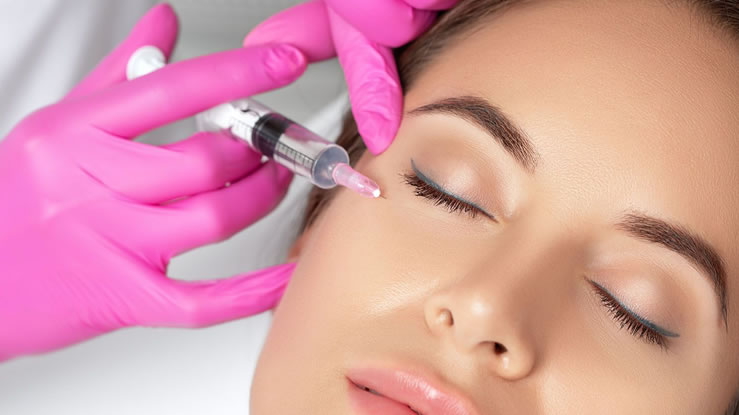
Preventative Botox can be worth it in your late 20s if you already have visible dynamic lines, lines that appear when you make expressions. It is not recommended for those under 25 with no visible lines. Small doses of 2–5 units per area are used, costing £100–£200 per area. The goal is to slow the formation of deep-set wrinkles, not to freeze your face. Always see a qualified prescriber.
Preventative Botox is worth considering in your late 20s if you already have dynamic lines forming, lines that appear when you smile, frown, or raise your eyebrows but disappear when your face is at rest. For most people with no visible lines in their 20s, however, leading UK dermatologists say the evidence does not yet justify the cost or the intervention.
The surge in preventative Botox among 24–32 year olds in the UK has been one of the most talked-about trends in aesthetics in 2026, driven largely by social media and celebrity culture. In this guide, we cut through the noise and give you the honest, evidence-based answer to whether preventative Botox is right for you, including what age to start, how much it costs, what the risks are, and what qualified UK practitioners actually recommend.
What Is Preventative Botox and How Does It Work?
Preventative Botox also called Baby Botox or proactive Botox is the use of small doses of botulinum toxin in your 20s or early 30s to slow the development of permanent wrinkles before they fully form.
The science behind it is straightforward. Wrinkles form in two stages. First, dynamic wrinkles appear, these are the lines that show up when you make an expression, such as smiling or frowning, and disappear when your face relaxes. Over years of repeated muscle movement, these dynamic lines gradually become etched into the skin as static wrinkles, lines that are visible even when your face is completely at rest.
Preventative Botox works by partially relaxing the muscles responsible for those repeated movements, reducing the frequency and depth of creasing in the overlying skin. Used consistently in small doses over several years, the theory is that you slow or reduce the severity of static wrinkles forming in the first place.
According to Dr. Justine Kluk, a consultant dermatologist and Fellow of the British Association of Dermatologists, “The concept of preventative Botox has some scientific logic, if you reduce repeated muscle movement during the years when collagen is still relatively abundant, you may reduce the depth of lines that form later. But it only makes sense once lines are actually beginning to appear dynamically. Before that point, there is no muscle activity to meaningfully address.”
What Age Should You Start Preventative Botox in the UK?
The right age to start preventative Botox in the UK is not a number, it is a skin assessment. Most qualified UK practitioners agree that the mid-to-late 20s is the earliest point at which preventative Botox could be clinically appropriate, and only for individuals who are already showing dynamic lines.
The Consulting Room, one of the UK’s largest aesthetic treatment information platforms, reports that the average age of first-time Botox patients in the UK has dropped from 34 in 2018 to 28 in 2025. This shift has been fuelled by social media influence far more than by clinical need, a fact that many practitioners are openly concerned about.
Here is how qualified UK practitioners typically assess candidacy by age group:
Under 25: Preventative Botox is generally not recommended. Collagen production is still high, skin elasticity is strong, and dynamic lines at this age rarely translate into significant static wrinkles later. Most qualified practitioners in the UK will decline to treat patients under 25 for cosmetic Botox without a clear clinical reason.
25–28: Appropriate for some patients who are already seeing persistent dynamic lines, particularly frown lines and forehead lines that linger slightly after expression. A thorough consultation is essential. Small doses only.
28–32: This is the most clinically justifiable window for preventative Botox for most people. Fine dynamic lines are beginning to appear more consistently, collagen production is starting to slow, and small preventative doses can meaningfully reduce the progression to static wrinkles.
Over 32: At this point the conversation shifts from preventative to corrective. Standard Botox dosing is typically appropriate, and the focus changes from prevention to treatment of existing lines.
How Is Preventative Botox Different From Regular Botox?
Preventative Botox uses significantly smaller doses than standard cosmetic Botox, targeting the same muscles but with less product, enough to soften movement without eliminating it entirely.
The key differences are:
| Preventative Botox | Standard Botox | |
|---|---|---|
| Dose per area | 2–8 units | 10–30 units |
| Goal | Reduce muscle movement partially | Relax muscle movement significantly |
| Expression preserved? | Yes, natural movement maintained | Reduced, more limited expression |
| Best age range | Late 20s to early 30s | 30s and above |
| Cost per area (UK) | £100–£200 | £150–£350 |
| Frequency | Every 4–6 months | Every 3–4 months |
| Results timeline | Preventative, seen over years | Corrective, visible within days |
The smaller doses used in preventative Botox mean that natural facial expression is preserved. This is an important distinction, a well-administered preventative treatment should be undetectable to others. If someone can tell you have had Botox in your 20s, the dose was likely too high or the placement was incorrect.
How Much Does Preventative Botox Cost in the UK in 2026?
Preventative Botox in the UK costs between £100 and £200 per area in 2026, reflecting the smaller doses used compared to standard treatment. The most commonly treated areas for preventative Botox are the frown lines and forehead, which together typically cost £200–£350 for a preventative regime at a reputable clinic.
Here is a breakdown of typical preventative Botox costs by area in the UK:
| Treatment Area | Typical Preventative Dose | Est. Cost (UK) |
|---|---|---|
| Frown lines (glabella) | 8–12 units | £100–£160 |
| Forehead lines | 4–8 units | £80–£140 |
| Crow’s feet (both sides) | 6–12 units | £100–£160 |
| Forehead + frown lines combined | 12–20 units | £180–£300 |
| Full upper face preventative | 18–30 units | £250–£400 |
Most practitioners offering preventative Botox also include a two-week review appointment. At this appointment, tiny adjustments are made to ensure natural movement is preserved and the result is symmetrical. This review should always be included in the quoted price, if it is not, ask why.
For a full breakdown of standard Botox prices by UK city, see our companion guide: How Much Does Botox Cost in the UK in 2026?
What Are the Benefits of Preventative Botox?
When administered correctly by a qualified prescriber at the right age, preventative Botox offers three core benefits.
Slowing wrinkle formation
The primary benefit. By reducing the frequency and depth of repeated facial creasing during years when skin still has good collagen density, you reduce the rate at which dynamic lines become permanently etched as static wrinkles. Clinical studies support this effect, particularly for forehead and frown lines.
Maintaining natural results
Because smaller doses are used at an earlier stage, the aesthetic outcome of preventative Botox tends to look more natural than corrective treatment. There is less risk of the “frozen” appearance associated with higher doses because the underlying muscles are not being fully paralysed, only softened.
Lower long-term cost
Patients who begin preventative Botox in their late 20s often require less product and less frequent treatment as they age into their 30s and 40s compared to those who begin corrective treatment later. Over a decade, the cumulative cost can be lower for consistent preventative patients, though this varies significantly by individual.
What Are the Risks of Preventative Botox in Your 20s?
Preventative Botox carries the same risks as standard Botox, with one additional concern specific to younger patients: unnecessary intervention.
Standard risks applicable at any age:
- Temporary bruising or swelling at injection sites, typically resolving within 3–5 days
- Headache in the 24 hours following treatment, usually mild
- Asymmetry if the product is unevenly distributed correctable at the two-week review
- Eyelid drooping (ptosis) if product migrates, rare with experienced practitioners and resolves within 4–6 weeks
- No result if the dose is too low, which is more likely with preventative dosing
Risk specific to preventative treatment in your 20s:
Over-treatment is the most significant concern unique to this age group. A practitioner who uses standard doses on a 25 year old under the banner of “prevention” is not performing preventative Botox, they are performing standard corrective Botox on someone who does not need it. This can lead to muscle atrophy over time, where the treated muscles weaken and thin from extended disuse, and paradoxically makes the skin above them appear looser as the supporting muscle mass reduces.
This is why the choice of practitioner matters enormously for preventative treatment. The appropriate dose for a 27 year old with mild dynamic frown lines is a matter of clinical judgement, not a standard formula, and it requires a practitioner experienced in conservative aesthetics.
Important: The NHS does not endorse preventative Botox for cosmetic purposes. If you have concerns about premature ageing, speak to your GP first. A GP can refer you to a consultant dermatologist for advice on evidence-based skin health interventions before considering cosmetic procedures.
What Do UK Dermatologists Actually Say About Preventative Botox?
UK dermatologists are broadly cautious about preventative Botox for patients in their early-to-mid 20s, while being more open to it for patients in their late 20s with visible dynamic lines.
Dr. Anjali Mahto, consultant dermatologist and author of The Skin Bible, has stated publicly: “I have no issue with preventative Botox for someone in their late 20s who is already seeing lines forming. My concern is the normalisation of starting in your early 20s with no clinical indication, driven by social media rather than medical need.”
Dr. Emma Wedgeworth, a consultant dermatologist and British Skin Foundation spokesperson, has similarly noted that sunscreen, retinol, and a consistent skincare routine will do more to prevent premature ageing in someone’s early 20s than any injectable treatment, at a fraction of the cost and with no procedural risk.
The consensus among UK dermatologists in 2026 is clear: preventative Botox is a legitimate tool used at the right time, on the right patient, in the right dose. Social media pressure pushing people to start in their early 20s before any lines are visible is not evidence-based and carries real risks of over-treatment.
What Are the Alternatives to Preventative Botox in Your 20s?
Before committing to any injectable treatment, the following evidence-based skincare habits will deliver measurable anti-ageing benefits in your 20s at significantly lower cost and with no procedural risk.
Daily SPF 30 or higher
Sun damage is responsible for an estimated 80% of visible facial ageing, according to research published in the Journal of Clinical, Cosmetic and Investigational Dermatology. Wearing broad-spectrum SPF every morning is the single most effective anti-ageing intervention available and it costs under £20 per month.
Retinol from your mid-20s
Retinol is the most clinically proven over-the-counter anti-ageing ingredient available in the UK. Starting with a low concentration of 0.025%–0.1% in your mid-20s, 2–3 nights per week, builds collagen and accelerates cell turnover. See our full guide: [The 7 Best Retinol Serums for Beginners in the UK (2026)]
Vitamin C serum in the morning
Vitamin C is a powerful antioxidant that neutralises free radical damage from UV exposure and pollution, two of the primary environmental triggers of premature skin ageing. Applied in the morning under SPF, it significantly enhances your sun protection.
Consistent hydration
Dehydrated skin develops and shows fine lines more readily. A good fragrance-free moisturiser used morning and evening keeps the skin barrier healthy and lines less visible. This does not prevent lines from forming, but it meaningfully reduces their appearance throughout the day.
Not smoking
Smoking accelerates skin ageing more than almost any other lifestyle factor. The combination of reduced blood flow to the skin and repeated lip pursing creates premature wrinkles around the mouth that no amount of Botox can fully address without also stopping smoking.
How to Choose a Practitioner for Preventative Botox in the UK
Choosing the right practitioner is even more important for preventative Botox than for standard treatment, because you need someone with the clinical judgement to know whether treatment is appropriate at all and the experience to use genuinely small doses that preserve natural expression.
Look for the following:
- A practitioner registered with the GMC (doctors), NMC (nurses), or GDC (dentists), verify at their respective websites before booking
- Experience specifically with younger patients and conservative dosing, ask to see portfolio photographs of patients in their 20s
- A practitioner who asks about your skincare routine and lifestyle before jumping to a treatment recommendation, a good practitioner may well suggest you are not yet a candidate
- A clinic accredited by Save Face (saveface.co.uk), the UK’s most trusted aesthetic practitioner register
- A follow-up appointment included in the quoted price, standard for all reputable clinics
One question worth asking at your consultation: “What would you do if you assessed me and felt I was not a candidate for preventative Botox today?” A practitioner who answers honestly ,”I would tell you and explain what signs to look for before returning”, is one you can trust. A practitioner who assures you that you definitely need treatment before they have examined you is not.
Frequently Asked Questions About Preventative Botox in the UK
Q: At what age should I start preventative Botox?
There is no single correct age, it depends on your skin, your genetics, and whether you already have visible dynamic lines. Most qualified UK practitioners consider the late 20s (27–32) the earliest clinically appropriate window, and only for patients with visible dynamic lines that are beginning to persist slightly after expression. Starting before 25 is rarely recommended by qualified practitioners.
Q: Will preventative Botox make me look frozen or unnatural?
No, if administered correctly at the right dose for preventative purposes. Preventative Botox uses 2–8 units per area compared to 10–30 units for standard treatment. At this dose, natural movement is preserved and the result should be completely undetectable to others. If you look “frozen” after a preventative treatment, the dose was too high.
Q: How often do I need preventative Botox?
Preventative Botox is typically repeated every 4–6 months, slightly less frequently than standard treatment because smaller doses are used and the goal is softening rather than full relaxation. Some patients with slower metabolisms can go up to 6 months between appointments.
Q: Is preventative Botox safe long-term?
Botulinum toxin has a well-established safety record in cosmetic use spanning over 30 years. The primary long-term concern specific to preventative use is muscle atrophy from excessive or overly frequent treatment, which is why conservative dosing and an experienced practitioner are essential. Standard preventative dosing by a qualified practitioner does not carry significant long-term safety concerns.
Q: Can I have preventative Botox if I am planning to get pregnant?
No. All forms of botulinum toxin are contraindicated during pregnancy and breastfeeding. If you are planning to become pregnant, discuss timing with your practitioner. Most advise stopping treatment at least 3 months before trying to conceive, though the product clears the system much faster than this in practice.
Q: Is preventative Botox worth the money compared to good skincare?
For most people in their early 20s, no, a consistent routine of SPF, retinol, and vitamin C will deliver comparable or better anti-ageing results at a fraction of the cost. Preventative Botox becomes worth considering in the late 20s when dynamic lines are actively forming and skincare alone is no longer fully addressing them. The two approaches are not mutually exclusive, the best results come from combining good skincare with appropriately timed preventative treatment.
Preventative Botox is a legitimate, evidence-based treatment, but only when used at the right age, on the right patient, in the right dose. For most people in their early 20s with no visible dynamic lines, a consistent skincare routine featuring SPF, retinol, and vitamin C will achieve more than any injectable treatment at a fraction of the cost and with no procedural risk. If you are in your late 20s and are already noticing lines that linger after expression, a consultation with a qualified UK prescriber is a reasonable next step, but let them tell you whether you are a candidate, rather than assuming you need treatment.
Related articles on Glow Cosmetology: