Can Dermal Fillers Move in the Face? A Complete Guide for 2026
Dermal fillers have become one of the most popular non-surgical cosmetic treatments globally, offering millions the chance to restore facial volume, smooth wrinkles, and enhance features like lips, cheeks, and jawlines. They are prized for providing subtle, natural-looking results with minimal downtime. However, as awareness and curiosity about cosmetic procedures grow, many potential patients have begun asking: can dermal fillers move in the face after injection, and what does that mean for safety and aesthetics?
This article explores the science of dermal fillers, what causes migration, how to prevent it, the available corrective options, common myths, and long-term considerations. By understanding these aspects, readers can make informed decisions about cosmetic treatments and achieve the best possible results.
Understanding Dermal Fillers
Dermal fillers are injectable substances that restore volume, shape, and hydration to facial tissues. The most widely used fillers are made from hyaluronic acid (HA), a naturally occurring molecule that binds water in the skin to produce plumpness and smoothness. Other types of fillers include:
-
Calcium hydroxylapatite fillers: Thicker and longer-lasting, often used for deeper lines and facial contouring.
-
Poly-L-lactic acid fillers: Stimulate collagen production over time, ideal for gradual volume restoration.
-
Polymethylmethacrylate (PMMA) fillers: Semi-permanent and used for deeper wrinkles or facial sculpting.
The choice of filler depends on the area being treated, the desired result, and the patient’s anatomy. HA fillers are preferred for reversibility and safety, whereas non-HA fillers may require more advanced corrective techniques if complications arise.
How Fillers Are Meant to Stay in Place
Dermal fillers are designed to integrate with the tissues at the injection site. Their chemical structure, viscosity, and cross-linking determine how firm and stable they remain over time. When injected correctly by a skilled practitioner, fillers should stay in place and provide predictable results.
Longevity varies depending on:
-
Filler type and composition: Firm, highly cross-linked HA fillers remain in place longer, while softer fillers are more malleable.
-
Metabolism: Individuals metabolize fillers differently; some may break down HA faster.
-
Facial activity: Muscles in highly mobile areas, such as around the mouth, may influence filler longevity.
Even when fillers are stable, subtle shifts can occur over time due to natural facial movement, aging, and gravity. This is usually minor, but in rare cases, more noticeable filler migration may occur.
What Is Filler Migration?
Filler migration refers to the unintended movement of the filler from its original injection site to another area of the face. While uncommon, it has been reported in clinical observations and is sometimes discussed on social media. Migration can lead to changes in facial contour, asymmetry, or lumps and bumps.
Factors Contributing to Migration:
-
Injection Technique: Improper placement—too superficial, too deep, or uneven—can destabilize the filler.
-
Filler Properties: Softer fillers and those with lower cross-linking are more likely to shift.
-
Facial Anatomy: Looser skin, thin tissues, or high mobility areas increase the risk.
-
Physical Manipulation: Massaging, rubbing, or trauma to the treated area soon after injection can displace filler.
-
Aging and Gravity: Over time, skin laxity and tissue loss may subtly alter filler position.
Common Migration Scenarios:
-
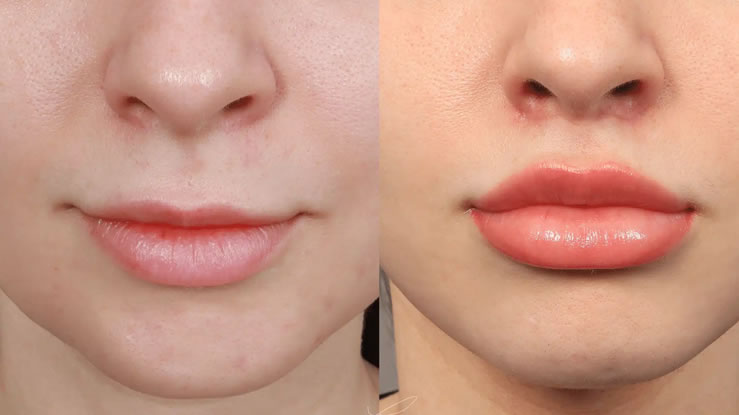
Lips: Lip fillers may spread slightly beyond the intended border if overfilled or if the patient manipulates the area.
-
Cheeks: Improperly placed cheek fillers may move downward with gravity over time.
-
Jawline and Chin: Migration is rare but can occur if large volumes are injected without proper technique.
-
Tear Troughs: The delicate under-eye area is prone to visible shifts if overfilled or poorly injected.
Symptoms of Filler Migration:
Patients may notice:
-
Uneven contours or asymmetry
-
Lumps, bumps, or swelling in unintended areas
-
Changes in the shape of facial features
-
Slight discomfort or tenderness
Corrective Measures for Filler Migration
Fortunately, there are effective options for addressing filler migration.
-
Hyaluronidase: An enzyme that dissolves HA fillers. This is the most common and effective solution for misplaced HA fillers and can restore balance within hours.
-
Secondary Treatments: In rare cases, additional filler placement may correct asymmetry or restore lost volume.
-
Surgical Intervention: For non-HA fillers like PMMA, correction can be more complex, sometimes requiring surgical removal or adjustment.
Expert Advice
Consulting a qualified injector is crucial. Experienced dermatologists and aesthetic professionals emphasize proper technique, patient assessment, and post-care to minimize migration risks. Two notable experts include:
-
Dr. Miriam Njeri, Allure Laser Skin & Aesthetic Medicine Centre, Nairobi, Kenya (https://www.allurelcm.com)
-
Dr. Sarah Ahmed, Elite Aesthetic Clinic, London, UK (https://www.eliteaestheticclinic.co.uk)
They stress that choosing an injector with a proven track record and understanding the filler’s properties are key to preventing migration.
Step-by-Step Guide: How Migration Can Happen
-
Injection Planning: Poorly assessed areas or high-volume injections in thin tissues increase movement risk.
-
Immediate Post-Injection: Swelling or pressure can displace filler. Avoid touching or massaging the treated area.
-
Weeks After Injection: Facial movements, exercise, or accidental trauma may subtly shift filler.
-
Long-Term Changes: Gravity, aging, and tissue laxity can gradually alter facial contours, sometimes accentuating filler displacement.
Preventing Filler Migration
-
Choose an experienced, board-certified injector
-
Understand filler properties and suitability for the targeted area
-
Follow post-injection care instructions carefully
-
Avoid pressing, rubbing, or massaging treated areas for at least two weeks
-
Attend follow-up appointments to detect early signs of migration
Common Myths About Filler Migration
-
Myth 1: All fillers move eventually.
Fact: Properly placed fillers in suitable tissues rarely migrate. -
Myth 2: Only cheap fillers move.
Fact: Even high-quality fillers can shift if technique or anatomy is not considered. -
Myth 3: Massage always causes migration.
Fact: Gentle facial massage is usually safe after healing; excessive pressure soon after injection is the main risk.
Long-Term Considerations
As fillers age, natural metabolism and tissue changes may subtly alter appearance. Regular maintenance appointments, choosing appropriate filler types, and monitoring changes are important for consistent results. Patients should also discuss long-term goals with their injector to plan treatment over years, not just weeks.
Global Trends in Filler Use
Dermal fillers are widely used across the US, UK, Australia, Canada, and other countries. Awareness of potential migration and complications has increased due to social media, online forums, and aesthetic education. This has led to:
-
Increased patient research before procedures
-
Emphasis on experienced injectors
-
Greater discussion about safe volumes and filler types
Dermal fillers are a safe, effective, and versatile tool for facial enhancement. While filler migration is a rare but real phenomenon, understanding its causes, prevention strategies, and corrective options empowers patients to make informed choices. Proper technique, high-quality products, post-care, and professional guidance are the best safeguards for maintaining desired results.
By staying informed about filler properties, risk factors, and long-term considerations, patients can enjoy natural-looking, long-lasting enhancements with confidence. Dermal fillers remain one of the most effective non-surgical options for rejuvenating and shaping the face when used wisely and responsibly.
Related Articles